

An Expert Guide for London, Surrey & the South of England
Building a luxury basement beneath a bespoke home is one of the most technically demanding and high-value residential construction projects in the UK. Unlike a typical extension, basement construction involves deep excavation, interaction with existing foundations, advanced waterproofing, neighbour risk management, and strict planning oversight.
This guide provides a comprehensive, technically authoritative overview of basement construction for luxury homes, covering planning permission, engineering methodology, waterproofing standards, cost drivers, programme risk, and delivery strategy across London, Surrey, and the South of England. As your trusted London luxury home builders, we are ready to help you add value to your property with a cutting-edge basement.
In most cases, constructing a basement beneath a luxury home requires planning permission. While some cellar conversions may fall within permitted development, new excavation, increased floor area, changes to ground levels, lightwells, or work in sensitive locations will trigger a formal planning application.
Across London and the Home Counties, many local authorities now include specific basement policies within their Local Plans or Supplementary Planning Documents due to the scale and impact of subterranean development.
Kensington & Chelsea Basement development is subject to strict controls, particularly in conservation areas and locations with high heritage value. Depth, footprint, tree protection, and cumulative impact are closely scrutinised.
Camden Basement Impact Assessments are commonly required to address structural stability, groundwater behaviour, construction methodology, and neighbour impacts. An independent technical review is often part of the planning process.
Wandsworth Basement proposals typically require planning permission, along with a Construction Management Statement covering logistics, noise, dust, and neighbour protection.
Other boroughs with defined basement policies include Westminster, Merton, Hackney, and Brent, reflecting the increasing complexity of subterranean construction in dense urban environments.
Early engagement with planning consultants and engineers is essential to avoid delays and refusals.

Basement construction requires carefully selected excavation and support strategies, tailored to ground conditions, neighbouring structures, groundwater levels, and access constraints.
Traditional Underpinning: A staged process supporting existing foundations incrementally. Often used for period properties or constrained urban sites.
Piled Retaining Walls: Secant or contiguous piles provide rigid perimeter support and are commonly used where deeper excavation or higher groundwater pressure is present.
Top-Down Construction: Allows slabs to be cast early, providing structural restraint and improving programme certainty in complex projects.
Each approach must be designed by experienced structural and geotechnical engineers to manage settlement risk, vibration, and load transfer.
Waterproofing is a critical component of basement design. Failure at this stage compromises usability, durability, and asset value.
BS 8102:2022 sets the UK standard for protecting below-ground structures from water ingress and defines waterproofing performance based on the intended use of the space.
Luxury basements frequently use combined systems to mitigate long-term risk and provide redundancy.
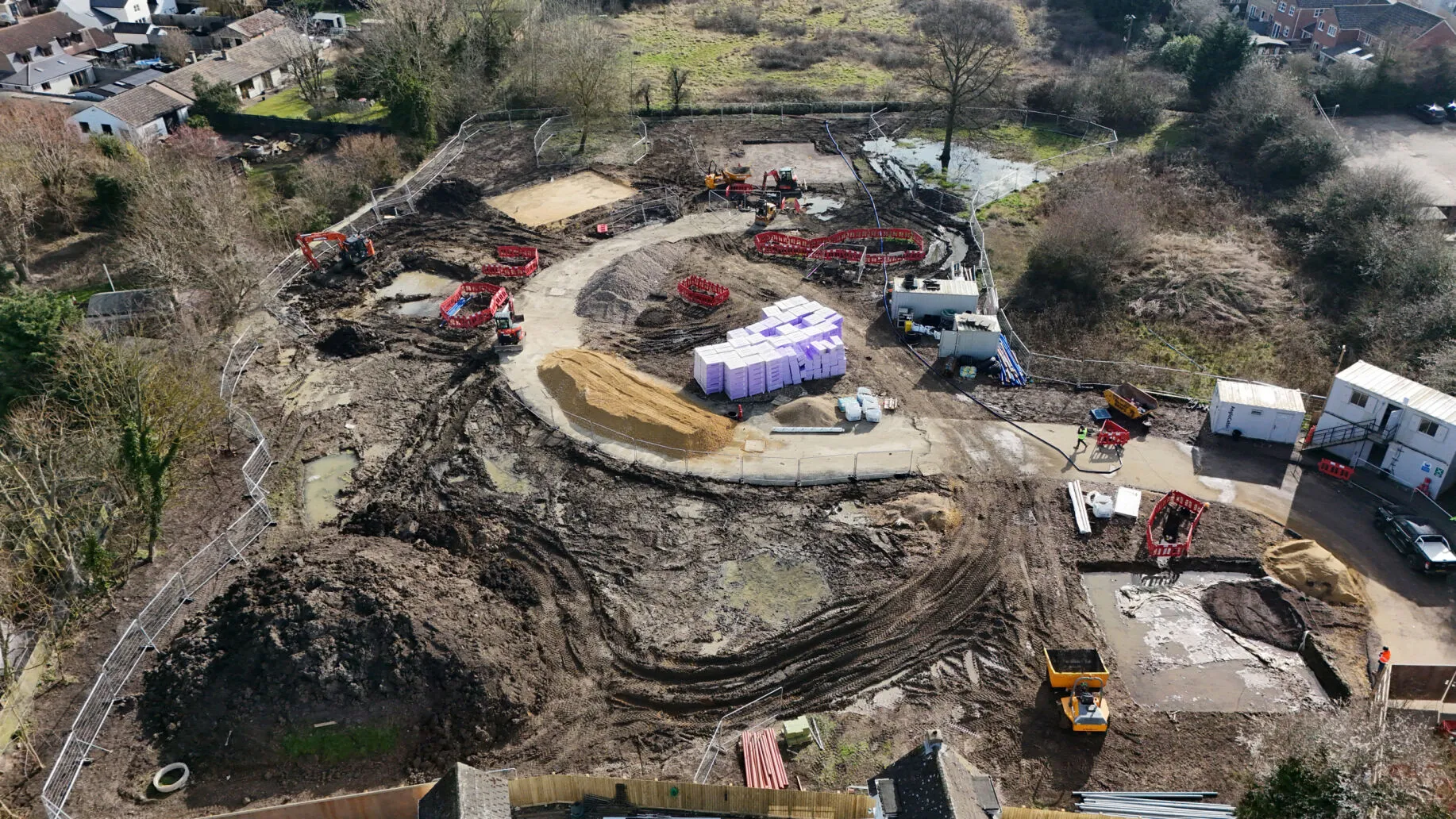
Luxury basements typically range from high five figures to several thousand pounds per square metre, depending on complexity. Costs are influenced by:
Clay, groundwater levels, and contamination significantly affect excavation method and waterproofing strategy.
Piled walls and complex temporary works increase costs relative to straightforward underpinning.
Restricted access, traffic management, and material handling constraints increase labour and programme costs.
Large spans, open-plan layouts, and integration with existing structures increase engineering input.
Planning documentation, monitoring, party wall matters, and specialist inspections add professional fees.
Luxury finishes, cinemas, gyms, wine stores, HVAC systems, and plant rooms materially increase cost.
Basement construction is highly sensitive to sequencing and coordination. Poor planning leads to delay, neighbour disputes, and cost escalation.
A disciplined construction programme reduces uncertainty and protects both programme and budget.
Basements must comply with all relevant Building Regulations, including structural, ventilation, fire safety, drainage, thermal performance, and access requirements.
Due to complexity, basement projects typically require a Full Plans submission rather than a Building Notice. Fire escape routes, ventilation, ceiling heights, and means of escape must be resolved at the design stage.
Recent enforcement action in Westminster highlights the risks of unauthorised basements. A Mayfair property was ordered to fill in an illegal multi-storey basement after planning refusal and enforcement action.
The lesson is clear: planning compliance is not optional in basement construction.
Luxury basements are frequently designed to accommodate:
Each use case introduces additional technical requirements for ventilation, fire safety, acoustic separation, and environmental control.
Basements combine planning complexity, structural engineering, waterproofing, and programme risk. Fragmented delivery models often fail under this pressure.
A design-and-build approach provides:
This model is particularly effective for luxury basement projects where failure is not an option.
The creation of a luxury basement is not merely a construction project; it is a strategic investment that profoundly enhances the value, functionality, and prestige of your home. Achieving this level of excellence demands an unwavering commitment to precision and expertise across every phase. True success is predicated on:
When these critical elements are expertly orchestrated, your bespoke basement transcends mere additional space, becoming a sophisticated extension of your luxury lifestyle – a testament to visionary design and flawless execution. Do not leave such a significant undertaking to chance. Partner with the proven leaders in luxury basement construction.
Unlock the full potential of your property with a basement for your bespoke luxury home. Our expert team is ready to guide you through every step, ensuring a seamless, high-value addition to your home.
Do luxury basements always need planning permission? In most cases, yes, particularly where excavation, lightwells, or sensitive locations are involved.
What is a Basement Impact Assessment? A technical report assessing structural, groundwater, and neighbour impacts, often required by London boroughs.
Why is BS 8102 important? It defines best practice for waterproofing below-ground structures to ensure long-term performance.
How much does a luxury basement cost? Costs vary widely based on ground conditions, engineering method, access, and fit-out specification.
Can a basement be used as a living space? Yes, provided it meets building regulations for ventilation, fire safety, and habitability.


At Lofthouse, whether you choose one of our signature development properties or commission a bespoke luxury home tailored to your vision, you can expect exceptional results.
Building Extraordinary Everyday


Registered in England & Wales | Company No. 11269888 | VAT No. GB 30 1554 934 | Privacy Policy
Powered by Construct Virtual website design and hosting
With over 20 years of experience in the construction and housebuilding industry, Richard has led Technical, Planning, and Design teams for construction and PLC housebuilders. Having assisted in the delivery of key developments such as Kew Riverside and Grosvenor Dock in Chelsea, and managing projects ranging from 50 to 750 homes, complete with schools, sports facilities, and retail units.
His experience spans bespoke high-end homes, retail and commercial schemes. He has also contributed to innovative projects like the Northstowe new town near Cambridge and is a strong advocate for modern construction methods.
With over 25 years of experience in finance and office management across sectors including healthcare, logistics, and construction services, Carole has overseen full finance functions for organisations ranging from SMEs to multi-site charities. She has managed payroll for over 130 employees, implemented credit control procedures, and prepared management accounts through to trial balance.
Her experience spans both strategic financial oversight and hands-on administration, including bank reconciliations, pension submissions, budget management, and diary coordination. A proficient user of payroll and accounting software, she has also liaised with external accountants to ensure smooth year-end processes and compliance with tax regulations.
Carole is a highly adaptable professional, with a strong background in credit control, payroll, and office operations, and is valued for her attention to detail, reliability, and ability to streamline processes in fast-paced environments.
With over 30 years of experience in the construction industry, Kevin is a seasoned Contracts Manager specialising in RC concrete frames and groundworks. Starting his career on-site and progressing through roles in both construction and contracts management, he brings a deep understanding of every phase of project delivery.
Notable high-profile projects that he has worked on include Battersea Power Station and the O2 Arena, where he played a key role as a construction manager. In addition to commercial landmarks, Kevin has also contributed extensively to residential construction, overseeing the groundworks and installation of superstructures for private bespoke homes.
His dedication to quality, safety, and efficiency continues to drive excellence across all aspects of his work.
After graduating from Cardiff University, Ryan joined Walsh Associates as a structural design engineer, focusing on high-rise reinforced concrete structures in London.
He later became a project engineer, managing key developments like Lombard Square (1,750 units) for Berkeley Homes and Ballymore. His role involved liaising with contractors, ensuring design information met project deadlines.
Now transitioning to the contractor side, Ryan aims to leverage his consultancy experience to bring a fresh perspective and enhance efficiency in the fast-paced construction industry.
Jayne brings extensive business expertise to Lofthouse Construction Group, having successfully founded, expanded, sold, and integrated businesses in her role as Chief Operating Officer.
She led key functions—including Finance, IT, Marketing, HR, Legal, Administration, and Project Management—driving innovation and operational excellence.
At Lofthouse Construction Group, she is focused on implementing structured processes, systems, and disciplined approaches to support the company’s rapid growth and exceptional team.
Paul is a Senior Site Manager with 15+ years in construction.
Starting as a bricklayer, he effectively coordinates trades on-site with his hands-on experience.
Committed to health & safety, he has successfully built over 200 homes including student housing and care homes, demonstrating his ability to deliver diverse projects efficiently.
Steve brings 35+ years of experience in the construction industry, specialising in grounds, basements, and concrete frames of up to 14 stories.
He has successfully managed numerous multimillion-pound projects for leading companies such as Balfour Beatty, Kier, Wates and Taylor Wimpey, overseeing teams with 110 personnel.
He has 35+ years in property development, specialising in bespoke projects like luxury apartments.
His roles at Antler Homes and Millgate Developments have refined his expertise in procuring high-end materials.
As Procurement Manager, he ensures superior quality and value across all projects, enhancing client satisfaction.
Intuitive, pragmatic, and process-oriented, James has worked across the entire brand and marketing mix in both agency and client-side senior roles, spanning over 25 years.
Representing a broad mix of global brands such as Barclays, IMG, and Hewlett Packard Enterprises, through to highly ambitious start-ups and SME brands, James has led high-impact, brand-led marketing campaigns that drive commercial growth and build long-term customer retention.
In his role as Marketing Director, James has instigated class-leading marketing strategies that deliver long-term customer value and drive the business forward.
Lindsay has extensive experience in relationship, client, and project management from investment banking.
As Client and Interiors Manager, she delivers our premier concierge service, transforming client visions into reality.
A British Institute of Interior Design member, Lindsay enhances the customer experience in luxury interior services.
Imaginative, energetic and ingenious, Stuart has originated brand, advertising, digital and marketing creative for a diverse array of global titans such as Disney/Pixar, Oxford University and Sir Robert McAlpine.
Diversified and adjacent roles and consultancies have included Chief Innovation Officer in structural insurance to working with Tier 1 contractors and suppliers in the built environment on digital strategy, app development, data management and analysis.
Stuart's role as Innovation Director involves extensive research, development and implementation of new ideas promoting modern working methods, utilising cutting-edge materials, products, processes and technology.
He has over 35 years of experience in construction, specialising in Carpentry and Joinery.
As Projects Director, he has worked on luxury developments for high-profile clients, including royalty and celebrities.
His commitment to quality craftsmanship ensures projects meet the highest standards, driving client satisfaction.
Jason brings 30+ years in the luxury residential market, managing premier projects with exceptional attention to detail.
His background includes roles at Royalton, Finesse Construction, and Phoenix Park Developments.
Known for delivering excellence, Jason’s leadership enhances the company’s reputation in high-end real estate.
Sharp, with an inquiring mind and prodigious attention to detail, Ann's successful career started in the world of banking, with roles in financial advice and management.
This expertise was put to excellent use, enabling a move into high-level finance and accounting recruitment for investment behemoths such as Citibank, Deutsche Bank, Merrill Lynch and technology giant NTL.
After taking a career break, she played a significant role in developing two bespoke, accessible homes while raising two beautiful children.
Ann's focus is now on talent acquisition, retention, and systems management in the demanding Lofthouse Residences HR & Operations Manager role.
He has 30+ years of experience in construction.
As Commercial Director (QS), he oversees project stages from acquisition to completion.
Previously, he was Senior QS at Millgate Homes and Partner at Quantum Merit Associates.
His expertise drives profitability and operational efficiency for sustainable growth.
James Bourke brings 30+ years of experience in the construction industry, managing groundworks projects exceeding £100 million. As London Regional Director at O’Keefe Construction, he scaled the business unit from £12 million to £60 million in turnover. At Deep Contractors, he launched a business unit generating £20 million in profit.
His portfolio includes prestigious developments such as:
James’s leadership has been instrumental in driving growth for clients such as Vastint, Barratt, and Berkeley Homes.
Paul Beaney has 30+ years of experience in the construction industry, beginning his career at Berkeley Homes before becoming Managing Director at Millgate Homes.
During his tenure, he contributed to the rapid growth of the company, overseeing the construction of over 1,200 homes, which ultimately led to Millgate Homes' acquisition by Countryside.
Currently, as Strategic Director at Lofthouse Residences, Paul leverages his extensive network of suppliers, subcontractors, architects, and land agents to shape the company’s long-term vision.
His strategic insights and industry expertise are vital for driving continued success and ensuring robust growth in a competitive market.
David Lofthouse brings 20+ years of investment banking experience to the construction industry, seamlessly transitioning his financial expertise into luxury property development.
After successfully creating two bespoke luxury homes, he founded Lofthouse Residences, driven by a vision to transform the sector.
David leverages his strategic insight to establish a business that offers concierge-level service, setting new benchmarks for innovation, creativity, cost-efficiency, and quality.
His commitment to excellence and ability to navigate complex financial landscapes position Lofthouse Residences as a leader in the luxury market, ensuring sustained growth and exceptional value for stakeholders.